Kabul, Afghanistan | December 21, 2020
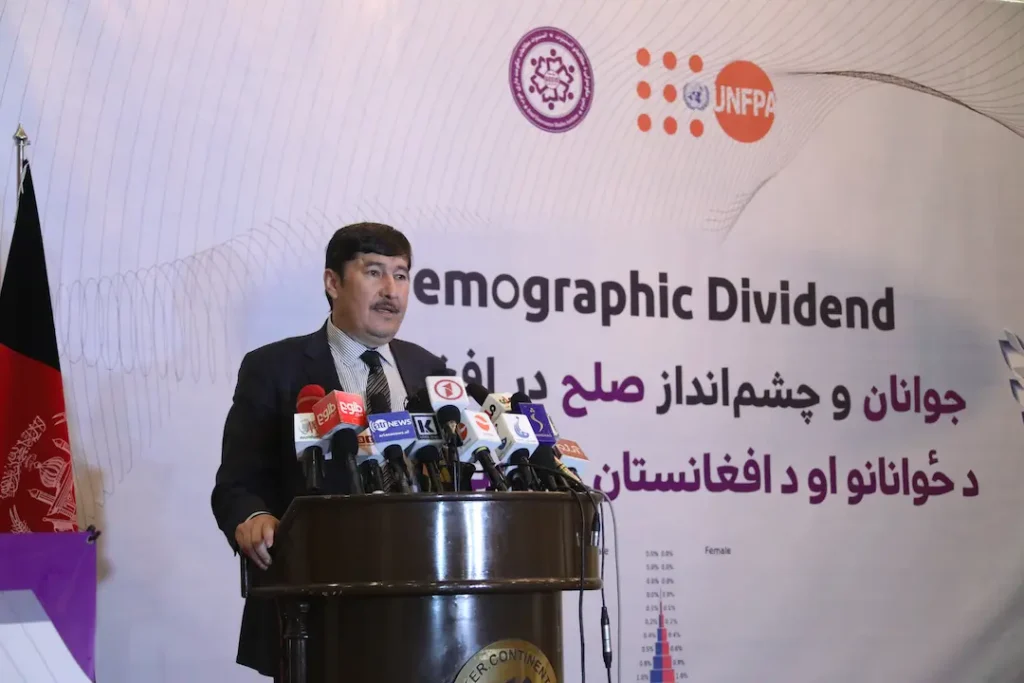
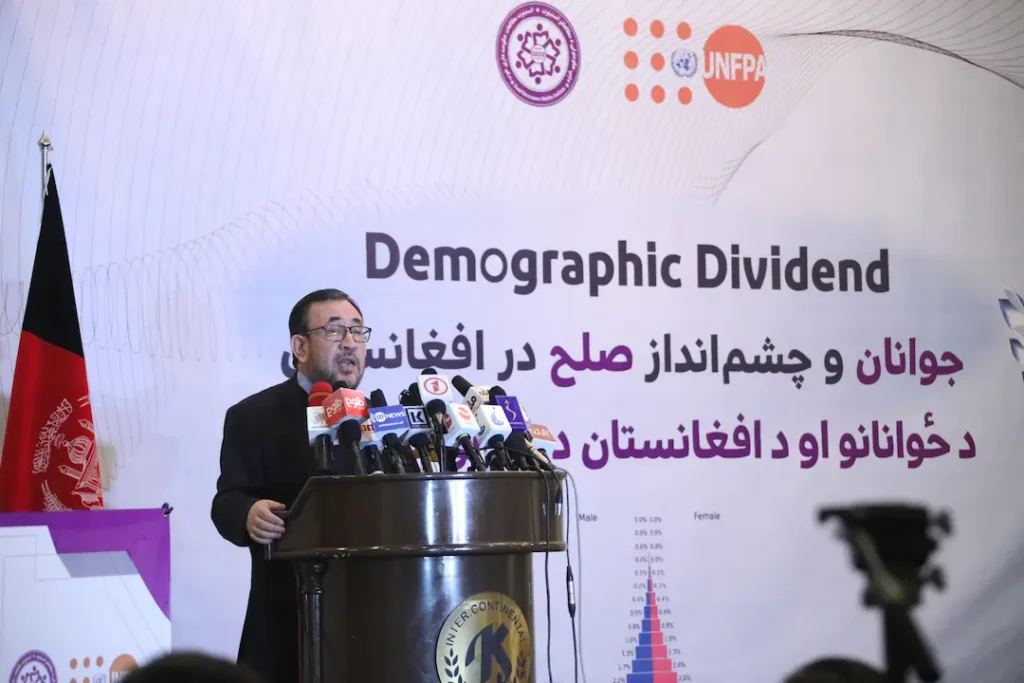
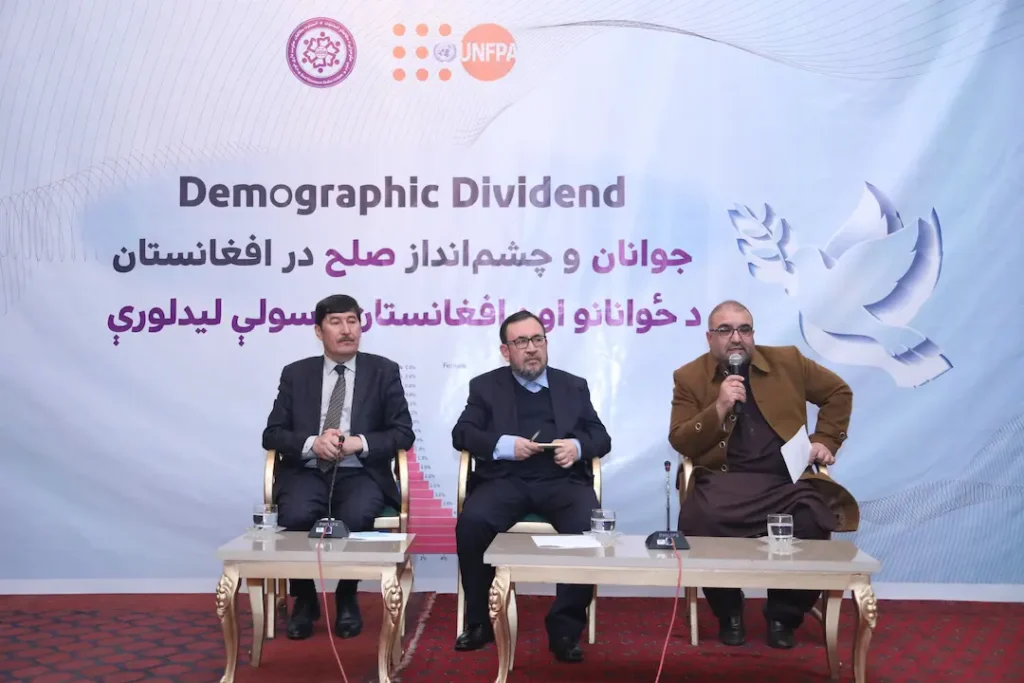
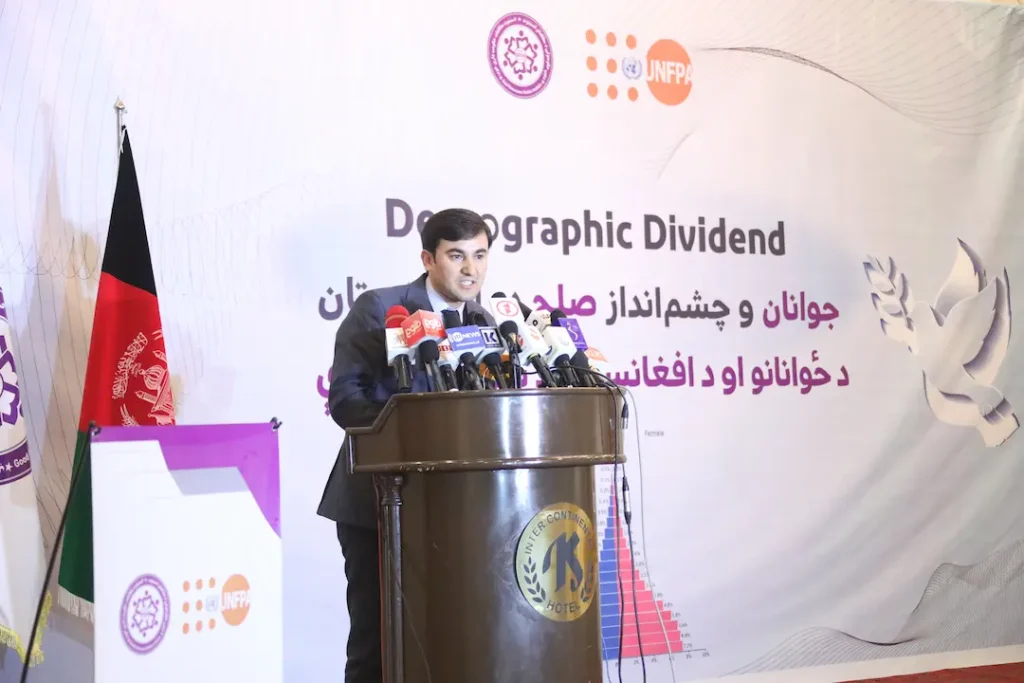
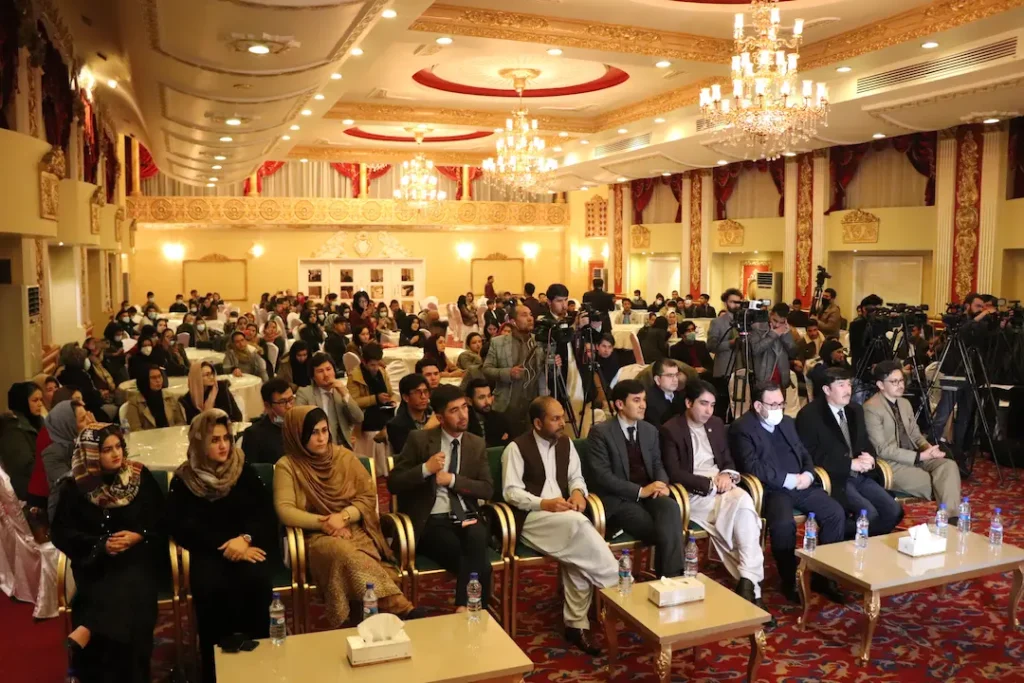
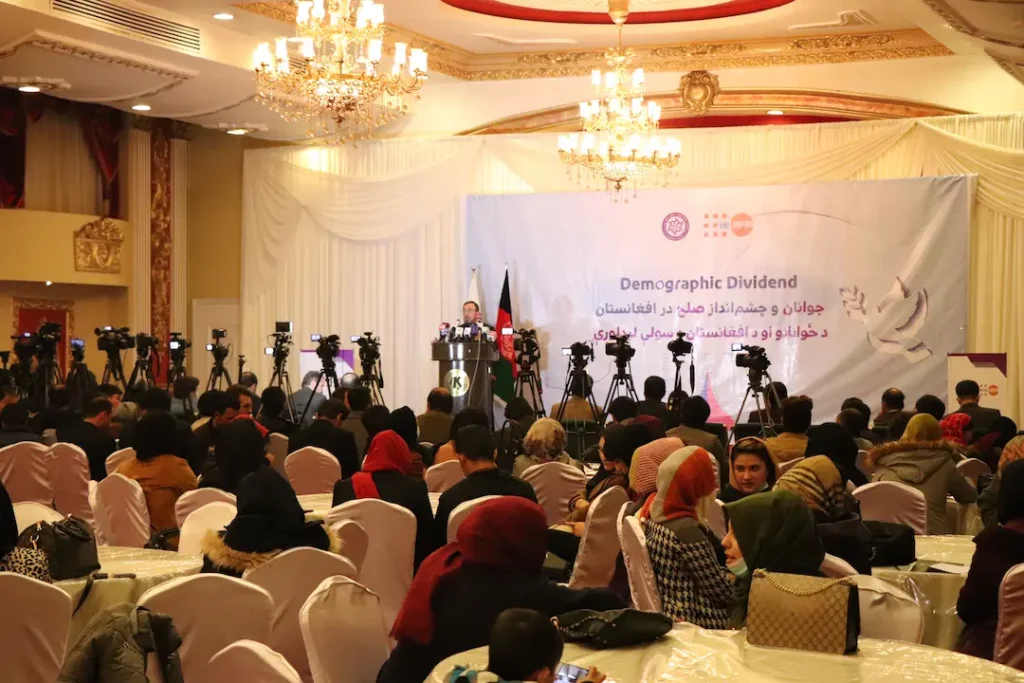
The Good Governance Studies Institute–Organization (GGSIO), in collaboration with the United Nations Population Fund (UNFPA), successfully convened the national conference titled “Youth and the Future of Peace in Afghanistan” at the Intercontinental Hotel in Kabul.
The conference brought together representatives of the High Council for National Reconciliation, members of the Islamic Republic of Afghanistan’s Peace Negotiation Team, officials from the State Ministry for Peace, families of war victims, and hundreds of youth, women, and political, social, and civil society activists.
Youth Participation as a Pillar of Sustainable Peace
In his opening remarks, Mr. Ahmad Etemadi, Executive Director of GGSIO, introduced the Institute’s governance and peacebuilding initiatives. He described good governance as a fundamental prerequisite for sustainable development and emphasized that peace provides the necessary foundation for achieving governance standards such as accountability, participation, and transparency.
Mr. Etemadi called upon the High Council for National Reconciliation and the negotiation team to ensure meaningful youth participation in peace-related decision-making processes and to safeguard generational interests during negotiations.
Voices of War Victims and National Values
Mr. Nabiullah Pirkhel, a member of GGSIO’s leadership and a representative of a war-affected family, addressed the conference by advocating for the protection of victims’ rights and national values during the peace negotiations. He stressed that Afghan cultural and national values are non-negotiable and urged all parties to prioritize an end to violence. At the same time, he conveyed a message of reconciliation, stating that families of war victims are prepared to support peace efforts in the interest of national unity.
Safeguarding Constitutional Values and Republican Principles
H.E. Asadullah Saadati, Political Deputy of the High Council for National Reconciliation, highlighted the need for a just and sustainable peace that protects constitutional values and preserves the republican system. He reaffirmed that women’s and youth rights, as well as the rights of religious, ethnic, and linguistic minorities, are not subject to compromise. He emphasized that the peace process must ultimately result in justice and fairness for all citizens.
Negotiation Progress and the Role of Organized Youth Movements
Dr. Mohammad Amin Ahmadi, university professor and member of the Afghan Peace Negotiation Team, provided detailed insights into the objectives, opportunities, and challenges of the peace talks. Reflecting on the initial eighty days of negotiations in Doha, he described them as a significant milestone and emphasized the importance of reducing violence to ensure meaningful progress.
Dr. Ahmadi encouraged Afghan youth to establish a nationwide youth union or structured platform to strengthen their collective representation at national and international levels. He noted that organized youth movements possess greater influence than isolated individual efforts.
Cultural Expression for Peace
The program also featured a special peace performance by the Koshan High School Music Group, whose musical presentation was warmly received by participants.
The conference concluded with an interactive question-and-answer session, during which senior officials responded to youth participants’ questions regarding the peace process and future prospects.
A Platform for Inclusive National Dialogue
The “Youth and the Future of Peace” conference reflects GGSIO’s commitment to facilitating inclusive dialogue, amplifying youth voices, and contributing to a sustainable, rights-based peace framework in Afghanistan. By creating structured engagement between decision-makers and young citizens, the Institute continues to advance governance-centered peacebuilding at the national level.